Why belly fat feels different after 40
Belly fat often becomes more stubborn after 40 because the body and lifestyle change at the same time. Many people lose muscle, move less, sleep worse, carry more stress, and try to diet harder instead of building a smarter system.
The trap is thinking the answer is extreme cardio or a starvation diet. That usually leads to fatigue, cravings, sore joints, and another restart. The BPF approach is different: protect lean muscle first, build a simple nutrition structure, and use training you can recover from.
Step 1: protect muscle first
Muscle is the engine. When muscle goes down, the body looks softer, strength drops, posture suffers, and fat loss gets harder to maintain. Your weekly plan should include progressive strength training before adding more random conditioning.
- Train full-body or upper/lower 3–4 days per week.
- Prioritize squats or squat variations, hinges, rows, presses, carries, and core stability.
- Stop treating soreness as the main goal. Progress and consistency matter more.
- Use joint-friendly substitutions when knees, shoulders, hips, or low back need them.
Step 2: set protein before chasing supplements
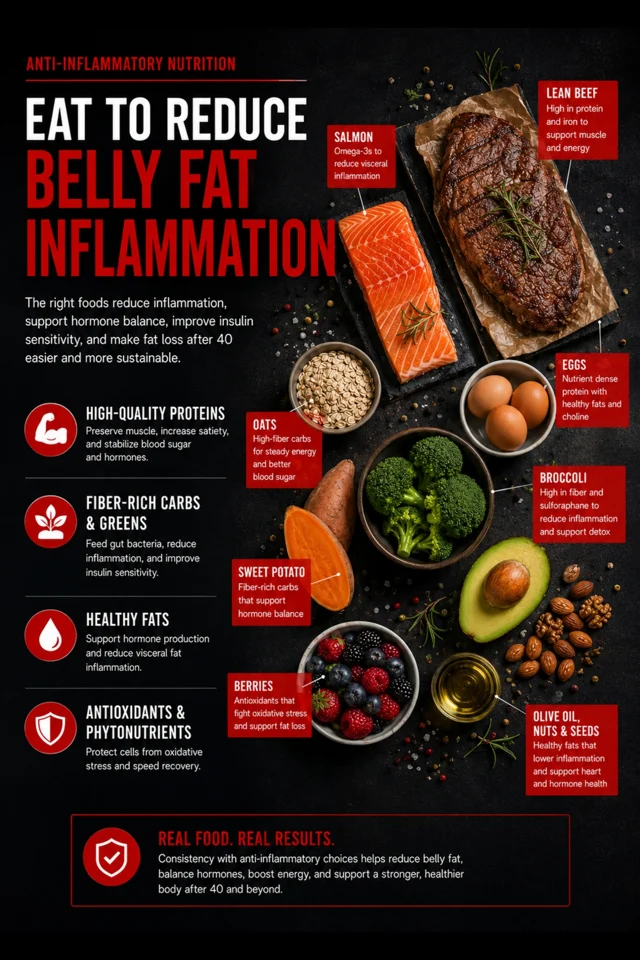
Protein is the first nutrition lever for adults over 40 because it supports muscle retention, training recovery, appetite control, and meal structure. Most people do better when every meal has a clear protein anchor.
Step 3: create a deficit you can actually repeat
You do need a calorie deficit to lose fat, but the deficit does not need to be aggressive. After 40, a moderate deficit with strength training and protein usually beats crash dieting because performance, sleep, mood, and adherence stay better.
- Track body weight using weekly averages, not one emotional weigh-in.
- Track waist measurement every 1–2 weeks.
- Adjust calories only after you have enough data.
- Keep high-quality carbs around training when they help performance.
Step 4: use walking as the fat-loss amplifier
Walking is underrated because it is not flashy. For adults over 40, it is one of the most recoverable ways to increase calorie output without beating up the joints or interfering with lifting.
- Start with a realistic daily baseline.
- Add 10–15 minutes after meals when possible.
- Use walking on recovery days instead of turning every day into a hard workout.
Step 5: stop abusing cardio
Cardio helps health and fat loss, but more is not always better. If cardio is making you hungry, tired, sore, or weaker in the weight room, the plan needs adjustment.
For many over-40 adults, the best formula is strength training plus walking, then small doses of conditioning if recovery is good.
Step 6: match the plan to recovery
Recovery determines how much hard training you can benefit from. Poor sleep, high stress, sore joints, and constant soreness all reduce training capacity. That does not mean you cannot train; it means the dose must be right.
The BPF weekly template
- 3 strength sessions: full-body or upper/lower split depending on recovery.
- Daily walking: build a consistent baseline before adding intensity.
- Protein target: hit daily protein before worrying about advanced hacks.
- Mobility: 5–10 minutes for hips, shoulders, ankles, and thoracic spine.
- Recovery check: adjust volume if sleep, energy, soreness, or joints are trending down.
Common mistakes that keep belly fat stuck
- Doing more ab work instead of fixing total-body fat loss.
- Dieting aggressively while under-eating protein.
- Skipping strength training because cardio feels more like fat loss.
- Training too hard for current sleep and stress levels.
- Changing the plan every week before the body has time to respond.
What to do next
Pick the BPF path that matches your situation. If you need structure, use the 28-Day Fat Loss Program. If you need a free starting point, use the app. If your schedule, joints, or consistency keep stopping you, apply for coaching.